

Did you know that Rebellion owns a costume and prop company?
Ben Smith, head of film, TV, and publishing at the UK firm, drops this little nugget into our conversation at the Screen Play event that took place at the London Games Festival in April. He has just come off stage, where alongside director of consumer products Victoria Justice and senior community manager Hollie Jones, he detailed Rebellion’s long-running transmedia ambitions.
Ben Smith | Image credit: Rebellion
It’s something Rebellion is perfectly set up for. Although the firm is primarily known in gaming circles for titles like Sniper Elite and Atomfall – which would go on to win the BAFTA for Best British Game after our conversation – it also has its fingers in all sorts of other pies, which provide all sorts of opportunities for cross-media collaboration.
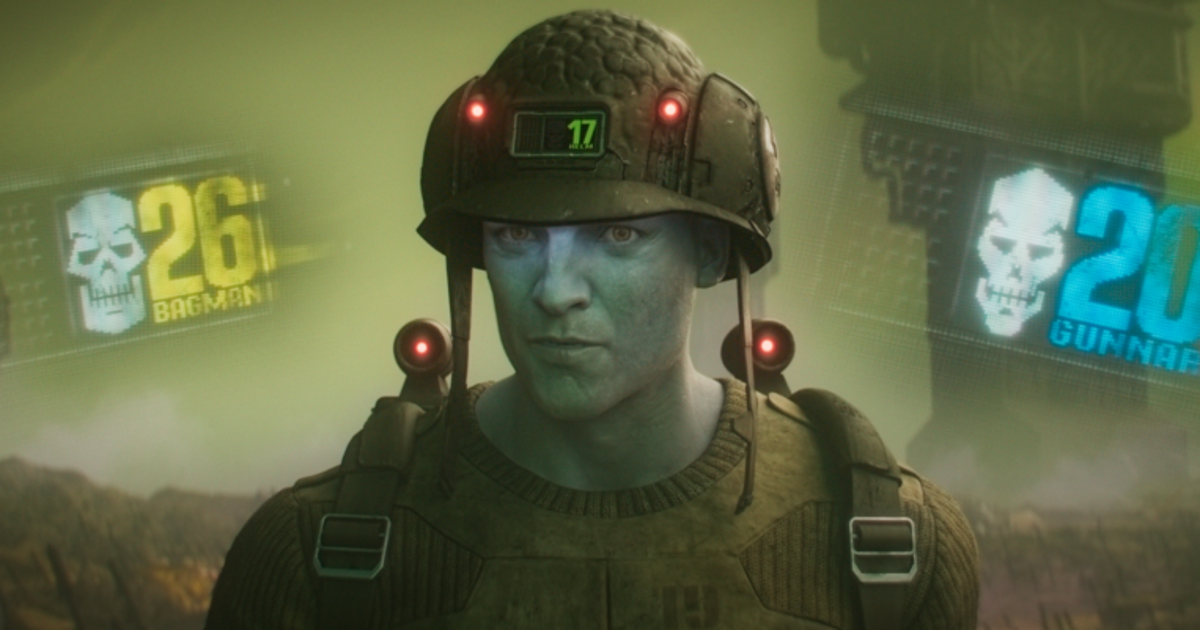
The studio bought the rights to the long-running sci-fi comic 2000AD in, appropriately enough, the year 2000, and since then the firm has acquired various other vintage British comics, including Action, Battle, and Roy of the Rovers, as well as publishing a number of novels. There’s also a tabletop gaming division, Rebellion Unplugged, which has produced a variety of tabletop RPGs and board games, including ones based on Sniper Elite and Judge Dredd, 2000AD’s most famous son. Plus the firm is currently producing a movie based on the 2000AD character Rogue Trooper, which is being helmed by Duncan Jones (director of Moon and Warcraft) and which is being filmed at Rebellion’s very own movie studio, which was set up in 2018.
Victoria Justice | Image credit: Rebellion
And then there’s the costume company. “We acquired the costume company because we were renting period-accurate Second World War uniforms from them for Sniper Elite,” Smith explains. The rented army outfits were scanned and then added into the game using photogrammetry, but Rebellion decided to go the whole hog and buy the company in order to support “the core business,” says Smith.
It’s all about a quest for authenticity, he says. “We make props, we design and create things that are then made physically by this extraordinarily talented prop company, that we then put back into our games using photogrammetry. So it’s this virtuous circle.”
The authenticity extends to generating sounds using physical Foley effects in Rebellion’s own audio department. Justice recalls the company once hired an Airbnb swimming pool to record the sounds of splashes. “It still blows my mind how much we do ourselves,” she says.
Independent streak
Founded in 1992, Rebellion is one of very few UK games companies to have survived for more than three decades without being bought out or shut down. Smith puts it down to the founders, Jason and Chris Kingley, who are firmly committed to remaining independent.
The teaser trailer for the upcoming Rogue Trooper movie, directed by Duncan Jones. Watch on YouTube
“They’re invested personally, creatively in each of the companies that they support with a very clear vision of how to support the games and franchises that they’ve launched and developed over the years. I think who’s in charge of the company is really important.”
Their commitment to keeping Rebellion independent extends to developing and maintaining the company’s own in-house game engine, Asura, rather than relying on third-party alternatives.
Yet despite the Kingsleys’ desire to keep control of the means of production, Justice says there’s a large degree of freedom within each of Rebellion’s many departments. “I’ve worked in gaming forever, and coming from quite corporate, US-based gaming companies, I think my one thing about Rebellion is that you’re given autonomy. So Jason and Chris very much oversee everything that the company does, but each department is given autonomy – ‘You know what you’re doing, go and do what you’re good at’.”
That allows each department the freedom to try new things, she says, whereas “some companies are quite rigid.”
Atomfall was a big success for Rebellion. | Image credit: Rebellion
The collaborations between departments can be subtle. “There is that transmedia happening, but I think it’s less obvious,” says Justice, pointing to the example of how various British comics Rebellion owns have turned up in the world of Atomfall.
“I don’t think we force things down people’s throats,” adds Smith, clarifying that when it comes to big transmedia pushes, it’s about waiting to see whether something is successful, and then exploring further opportunities afterwards. “I’ve been to a few games panels where I’ve heard about people originating the world first because it’s going to be this transmedia experience, and it’s almost as if the transmedia thing comes first,” he says. For him, however, “the primary thing has to be a success, and [that] leads what that IP becomes.”
Justice agrees, saying “you’ve got to see an element of that success to be able to pull a strategy together,” arguing against the idea of “putting your eggs in one basket” at the very beginning in case the IP doesn’t perform as well as expected. “If we just did a film of every game we did…”
“…we’d go bust very quickly,” Smith leaps in.
Rebellion’s next game is Alien Deathstorm. Will that also get the transmedia treatment? | Image credit: Rebellion
A good example of Rebellion’s strategy in this regard is Atomfall, which after selling more than 2.5 million units (according to Video Game Insights estimates) is only now being turned into a TV series.
Smith says that conversations about potential spinoffs and collaborations are “always happening” at Rebellion, but whether and when they happen depends on what else is going on in the company and the capacity of each division at the time. “So I think that we’re always going to be alive to, ‘Oh, this is presenting an interesting opportunity, what should we do with that?’ And I think actually we’re trying to potentially work further ahead in that regard.”
“It’s about managing these things across decades,” he continues. “It genuinely is about building up and sustaining things, and the opportunities don’t all have to happen at once. The opportunities come at different times. Rogue Trooper was a comic for 40 years, was a video game for 20, and it is now a film. It didn’t all have to happen in the same nexus. In fact, the longevity of a world or a character is what sustains us.”
