

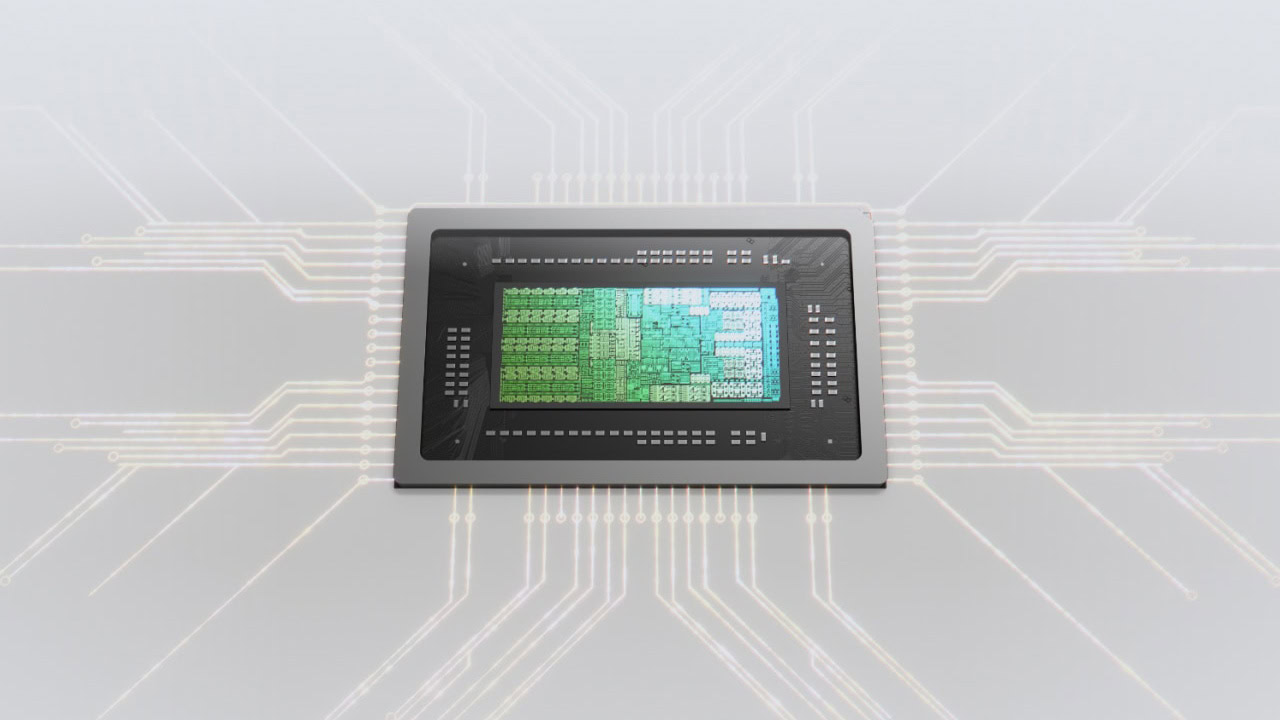
The chip is set to debut in a wave of premium Windows laptops later this year, with early designs announced from Microsoft Surface, ASUS, Dell, HP, Lenovo, and MSI. RTX Spark systems will span thin-and-light 14-inch creator laptops, to larger 16-inch workstations, and mini-desktop PCs, all built around the same unified-memory architecture and Blackwell GPU technology.
As someone who’s used a Snapdragon X-powered Windows PC for a while now, the everyday performance and battery life have been exceptional, but promises of revolutionary on-device AI haven’t materialized. Running any advanced model is essentially impossible with just 16GB of RAM and no viable accelerator.
The RTX Spark aims to be quite different, packing a colossal 128GB of unified system memory alongside a Blackwell GPU and Arm-based Grace CPU designed specifically for AI workloads. The price will undoubtedly be exorbitant in the current RAM-restricted market, but if your interest is piqued, here’s a lower-level look at what NVIDIA has packed into the RTX Spark.
Mobile-class CPU, only better
Robert Triggs / Android Authority
Peeking inside the CPU department reveals a lot about where the superchip has come from, making it a good place to start. The RTX Spark is powered by NVIDIA’s N1X, aka the GB10 Grace Blackwell Superchip. The GB10 already powers the $4,700 DGX Spark, which runs NVIDIA’s DGX Linux OS instead of Windows.
The GB10 uses a modern Armv9 CPU design, the same architecture found in high-end phone chipsets, that should deliver strong everyday performance. The chip is built from 10 Arm Cortex-X925 and 10 A725 cores, for a total of 20 CPU cores. The X925 launched in 2024 and was found in last year’s MediaTek Dimensity 9400 for smartphones, albeit in a single-big-core configuration. Interestingly, MediaTek helped NVIDIA design the CPU inside the RTX Spark, which helps explain some of the similarities.
At its core, RTX Spark is powered by the same Arm CPU technology as flagship smartphones.
Not only does the RTX Spark have ten powerhouse cores and ten performance cores (far more than your phone), but it also runs its X925 at 4.0GHz and A725 at 2.85GHz, providing a step up in per-core performance over last-generation smartphone implementations as well. The GB10 has a similar cache setup to the Dimensity, up to 2MB L2 for the X925 and 512KB L2 for the A725, paired with 16MB L3 and 16MB system cache.
It might not quite match the highest-end Apple Silicon or Qualcomm Oryon implementations in lightly threaded workloads, but its 20-core configuration should still provide substantial CPU performance.
Unified RAM for local-AI
Lanh Nguyen / Android Authority
Perhaps the more important server-class technology that NVIDIA is including in the RTX Spark is the NVLink-C2C interconnect. The memory link provides up to 600 GB/s of bidirectional bandwidth between the CPU and GPU, enabling the two to share a unified address space with virtually no overhead.
Again, we see this shared-memory approach in smartphones. Modern smartphone SoCs increasingly rely on large shared caches to efficiently feed CPU, GPU, and AI workloads with data, along with a single LPDDR5X pool shared by apps, games, and on-device AI models like Google’s Gemini Nano.
CPU and GPU sharing 128GB memory is key to fast on-device AI.
NVIDIA notes that its interconnect is roughly 5x faster than PCIe Gen5’s bidirectional bandwidth, which can be a notable bottleneck if large AI models must be split between system and GPU RAM. However, NVIDIA’s choice of LPDDR5X RAM has an effective memory bandwidth of 273GB/s, much slower than the 768 GB/s or so you’ll find on graphics cards with dedicated GDDR6/7 memory. So I don’t expect the RTX Spark to deliver gaming performance on par with a very top-end PC GPU.
Even so, NVLink-C2C enables the CPU and GPU to share the large 128GB package-level LPDDR5X memory pool for apps, graphics, and AI workloads that demand extreme memory performance. NVIDIA notes that its 128GB unified memory is sufficient to hold a 120-billion-parameter AI model. GPT-OSS 120B is around 80GB, while NVIDIA Nemotron 3 Super is 83GB. By comparison, Google’s on-device mobile AI models fit in less than 4GB of RAM, showcasing just how much more memory you need to go from pocketable to server-class AI.
A new way to work on laptops
Robert Triggs / Android Authority
Of course, to crunch through those AI workloads, you need a processing unit built specifically for this purpose. This is where the RTX Spark really aims to differentiate itself: it sports an integrated Blackwell GPU — the same architecture that powers NVIDIA’s 5000-series gaming GPUs.
The GPU inside the RTX Spark sports 6,144 CUDA cores, matching the GeForce RTX 5070 on paper. However, significantly lower memory bandwidth and a much tighter power envelope mean gaming performance will likely fall well short of a desktop RTX 5070. Even so, it supports DLSS 4.5, Reflex, and hardware ray tracing, bringing many of the same feature capabilities found in NVIDIA’s desktop gaming GPUs.
While gaming will be possible, this GPU is designed to bring the CUDA and TensorRT AI ecosystem into the hands of everyday users. NVIDIA claims up to 1 petaflop of FP4 AI performance, aiming to run large quantized models directly from the 128GB unified memory on those CUDA cores. For very large models that exceed conventional GPU memory limits, the RTX Spark’s 128GB unified memory will be more practical than relying on a faster GPU with only 16GB or 32GB of VRAM.
NVIDIA follows the same path as Apple Silicon: large unified memory, Arm CPUs, and a tightly integrated GPU.
In many ways, the RTX Spark represents the convergence of two computing worlds. Its efficient yet powerful Arm CPU architecture, unified memory design, and power-efficient packaging borrow heavily from ideas that have already transformed smartphones and Apple Silicon Macs. Yet NVIDIA combines those concepts with a Blackwell GPU, CUDA acceleration, and an unusually large memory pool aimed at local AI inference and server-tier workloads.
Whether the pivot to AI-first workstations proves a success will hinge on the price. While we don’t know what the first wave of laptops launching this fall will cost, the existing DGX Linux desktop version suggests prices will be very high indeed. Still, the platform looks promising for that small but growing section of Windows users eager to run their own powerhouse AI workloads.
Don’t want to miss the best from Android Authority?
Thank you for being part of our community. Read our Comment Policy before posting.
