

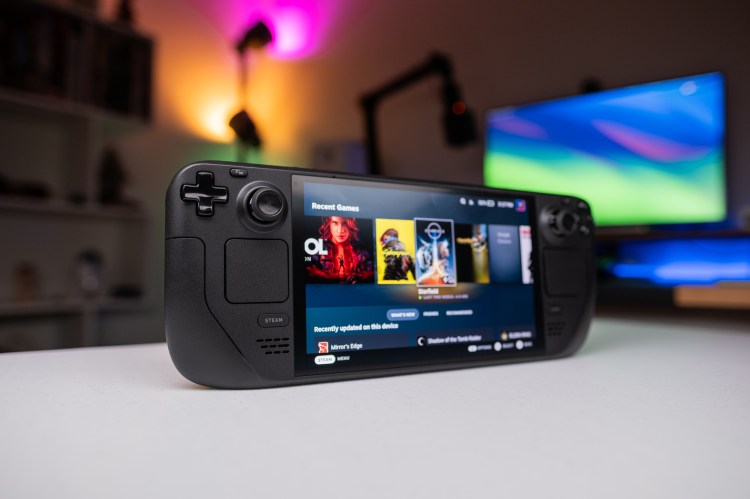
In a stunning reversal of traditional video game console economics, Valve has officially brought the Steam Deck back to its digital storefront, but with a massive, controversial catch. Following a brutal three-month period of total inventory depletion, the portable PC gaming pioneer returned to market on Wednesday, May 27, 2026, carrying a staggering price increase of up to 46%.
The updated pricing structure eliminates the older, entry-level LCD options entirely, shifting the baseline product catalog exclusively to the premium OLED models. The price hikes represent a dramatic pivot for a device that built its global reputation on delivering high-performance, affordable PC gaming on the go.
The sudden price adjustments instantly push Valve’s handheld into a luxury pricing bracket that rivals full-fledged home consoles and mid-range desktop gaming computers.
The top-tier 1TB OLED model now commands an astronomical $949 USD, a direct $300 jump from its baseline launch price. This new reality has sent shockwaves through the gaming community, as it means a four-year-old portable processor architecture now costs significantly more than a PlayStation 5 Pro in the United States. International markets are facing a similarly harsh conversion curve, with the 1TB model climbing to $1,349 CAD in Canada, €919 in Europe, and £779 in the United Kingdom.
The AI Appetite: Why Gaming Hardware is Getting Priced Out
In a brief corporate statement addressing the backlash, Valve chose to bypass standard PR spin, pointing directly to severe upstream infrastructure constraints. “Steam Deck itself hasn’t changed,” the company clarified. “These new prices reflect the current state of component costs and other global logistical challenges across the industry as a whole.”
Behind that statement lies an uncomfortable truth: the consumer electronics sector is locked in a fierce resource war with the artificial intelligence boom. AI hyperscalers and massive cloud data centers are buying up high-bandwidth memory (RAM) and NAND flash storage chips in unprecedented, bulk quantities.
This surging, non-gaming enterprise demand has effectively drained the global semiconductor supply chain, triggering a severe components crisis. For privately-owned Valve, swallowing these inflated manufacturing costs was no longer viable, forcing the company to pass the premium supply-chain tax directly down to the consumer.
Logistical Headwinds: Tariffs, Energy, and Changing Trade Routes
Beyond the memory chip crisis, Valve’s operational margins have been heavily squeezed by escalating macroeconomic and geopolitical disruptions. Industry supply lines are facing a multi-front logistical bottleneck:
Factor
Root Cause
Direct Impact on Electronics
Escalating Freight Costs
Ongoing international conflicts
Surging aviation fuel prices inflate shipping overhead per unit
Supply Chain Relocation
Aggressive international trade tariffs
Manufacturing hubs actively shifting from China to Vietnam and Mexico
Component Shortages
High enterprise AI hardware demand
Record-high premium costs for baseline RAM and SSD components
This tectonic shift in global manufacturing has radically changed import dynamics. Recent data from the Consumer Technology Association (CTA) reveals that consumer tech imports to the US from China plummeted to just 12% in early 2026, down from 45% just a year prior. While shifting assembly lines to countries like Vietnam protects tech companies from punitive tariffs, setting up new supply chain networks creates severe friction and structural cost realities that cannot be resolved overnight.
The Shadow Over Valve’s Hardware Roadmap
The massive price adjustment casts a definitive shadow over Valve’s unreleased, next-generation hardware pipeline. The company’s highly anticipated console-style desktop PC, the Steam Machine, alongside its rumored Steam Frame standalone VR headset, were both delayed earlier this year due to the identical component shortage.
Hardware analysts note that Valve’s initial goal was to price the entry-level Steam Machine below the $1,000 threshold to aggressively capture living room market share. However, with the portable Steam Deck now knocking on the door of $950, industry experts warn that an under-the-TV console featuring a discrete, power-hungry GPU will almost certainly debut well past $1,200.
For decades, the golden rule of video game hardware was entirely predictable: as a console aged and manufacturing efficiencies scaled, the retail price dropped. The reality of 2026 has officially flipped that script on its head.
While Valve continues to offer a minor silver lining by selling refurbished LCD models starting at $359, the barrier to entry for factory-new, premium Steam Deck hardware has fundamentally transformed. As rivals like ASUS and Lenovo prepare to face identical component pricing renewals for their respective handheld lineups, the era of the sub-$500 mobile PC gaming powerhouse appears to be officially over, replaced by a hyper-inflated, luxury landscape shaped by the insatiable demands of the AI economy.
