

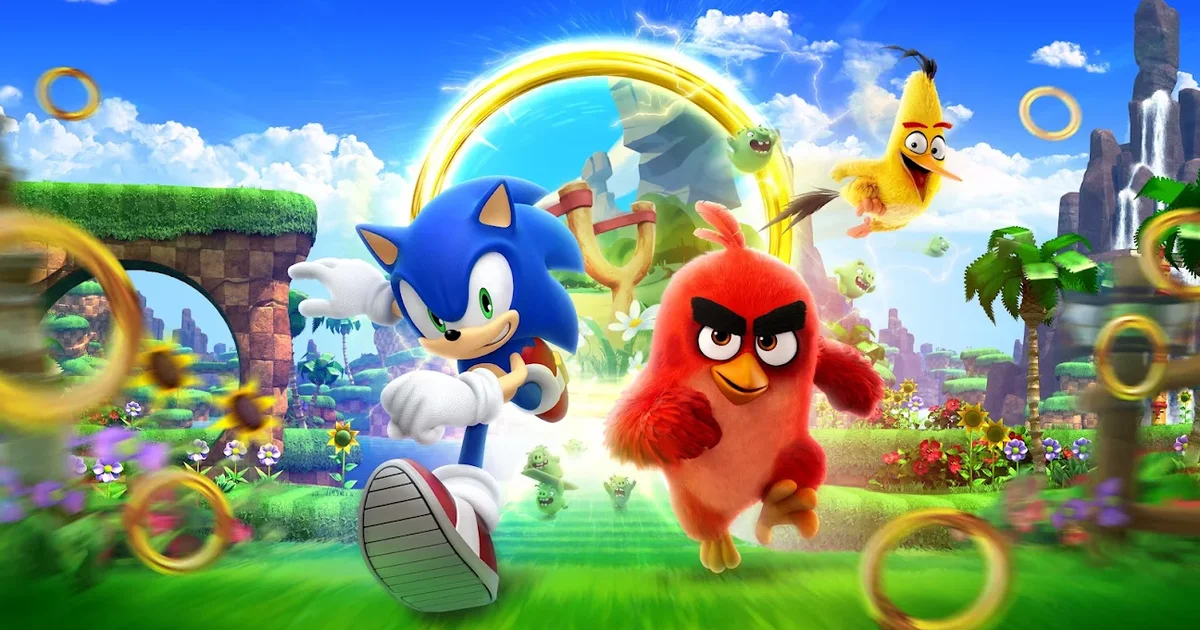
In 2023, Japanese games giant Sega Sammy acquired Angry Birds maker Rovio for $776 million.
In theory, it was a perfect coupling. While Sega already had a mobile business, it lacked hits, at least in the West. Rovio was a native mobile juggernaut with deep knowledge, expertise and – most importantly – technology. That’s on top of an iconic property in Angry Birds, the original smash hit mobile IP.
But things have not gone well. In February, Sega recorded a $200 million impairment on the cost of acquiring Rovio, stating that its profitability “has fallen below the initial forecast.” Speaking to investors, Sega CEO Haruki Satomi said one problem was its inability to integrate Rovio’s Beacon technology with its own mobile titles.
“Our objective was to strengthen effective operations and global rollout by applying this system to Sega’s mobile titles for core users,” he said.
“However, upon actual installation with existing live titles, we found that the operational and marketing methods and approaches significantly differ from Rovio titles and new mobile games are yet to fully exploit Beacon. Consequently, we have unfortunately not achieved the level of results that had been expected prior to the acquisition.”
Speaking to investors about its 2025/26 financial year, Sega said that Rovio was going to be focused on “rebuilding,” and once that’s done, the Angry Birds firm would continue to try and build a “global game-as-a-service.”
Three years ago, a union between Sega and Rovio looked to be a match made in heaven. So what went wrong?
Past its peak
For Louise Wooldridge, senior research manager for games at Ampere Analysis, a few factors are at play.
Louise Wooldridge | Image credit: Ampere Analysis
“Angry Birds, though widely recognised, is a mature brand and not really a major growth franchise – it had already peaked, and turning the tide on this would have been very difficult,” she says.
“The mobile games market also changed considerably post-acquisition. The deal was priced based on the assumption of continued, rapid growth in the mobile space and cheap user acquisition, but instead, we saw growth slow, and marketing costs rise. Games in general is also battling more social, creator-led platforms like Roblox and TikTok for consumer attention.
“Plus there is the lasting impact of Apple’s App Tracking Transparency (ATT). Although that came a couple of years prior to the Rovio acquisition, its effects persist, and it has been especially damaging for mature franchises like Angry Birds which rely more heavily on paid advertising for user acquisition.”
Many of these sentiments are shared by industry analyst Joost van Dreunen of Aldora, who also believes that Sega put too much faith in a franchise long past its prime.
“Leveraging IP tends to provide a false sense of security,” he argues. “Despite being a relatively well-known property, Angry Birds’ cultural peak is obviously behind it. Sega, in effect, acquired a fading franchise. According to its earnings, Rovio’s sales fell from €309 million to €181 million, and management described Angry Birds 2 as having ‘bottomed out’.
“More generally, the mobile games market has dramatically changed since Rovio had its moment in the sun, and simply building a massive library of IP alone is no longer sufficient given the frenzied competition for audience attention.”
Pascal Clarysse
Pascal Clarysse, the founder of Big Karma and the author of The Slingshot Formula: How Angry Birds Launched Their Way from Indie Game to Global Icon, agrees on the mobile market shift, pointing to the amounts of money that established players need to spend in order to stay at the top.
“The mobile market has matured to a point of saturation over the last couple of years,” he says. “Every genre has its dominating leaders that have the capacity to spend tremendous amounts in user acquisition and retention to maintain their positions. Rovio was never the highest spender nor the most expert team on the planet when it comes to such data-intensive activities. This means that the projected revenue of new titles after the acquisition date has been missed by a significant margin, while legacy titles have also slightly under-performed as well.
“Even on Angry Birds 2, Rovio’s strategy is more focused on partnerships and barter deals with other mega-brands, which is cost effective for live ops and community appeal for sure, but not enough to compete and grow to the top of the charts anymore.”
A recurring pattern
This isn’t the first time that a major AAA publisher has acquired a mobile giant only to face, at least initially, disappointing results. In 2022, Take-Two revealed its intention to acquire Zynga for $12.76 billion, which was briefly the biggest acquisition in games history until Microsoft announced its $68.7 billion purchase of Activision Blizzard eight days later.
Early indications were not promising. In the two years following the Zynga buyout, Take-Two recorded several billion dollars’ worth of goodwill impairment, seemingly related to the acquisition.
After that, though, it all came good. Zynga has become an important and profitable part of Take-Two’s business, generating just over half of the Grand Theft Auto giant’s revenue for the 12 months ending March 2026.
Toon Blast was a big growth driver for Zynga last year. | Image credit: Zynga
So why do these mobile deals seem to result in initial disappointment for AAA giants?
“The mobile games market is a lot more fragile than it appears,” Wooldridge explains. “Successful mobile games demand long-term maintenance of various moving parts, such as app store visibility, efficient user acquisition, player engagement and more, and any of these aspects can easily be destabilised. Mobile game economics have more potential for rapid change than in the console space, for example, where things are a lot more static and fixed. Also, and maybe most importantly, these mobile companies are typically valued at their peak, so when growth inevitably slows, forecasts are not met.”
Another factor is, once again, expectations. Clarysse says that often console-focused acquirers forecast huge growth based on the new market that having a mobile business would open. Part of this is imagining what mobile specialists might be able to do with their AAA console IP.
“Mobile game economics have more potential for rapid change than in the console space”
Louise Wooldridge
“Things are not always that simple,” he says. “I’ve seen countless mobile games with strong mechanics reskinned with AAA IPs not survive soft-launch just because of the daunting economics of the field. At the end of the day, if your lifetime value is substantially inferior to your competitors, they will always be able to outspend you on a per-player basis in order to keep the best positions in the advertising ecosystem and keep other new titles out at the gates.
“AAA branding doesn’t fix this. It can marginally lower the costs of marketing, but the cost per install discount is usually not enough to offset what it takes to compete with the mobile incumbents on the return on ad-spend front. It takes a few millions to make the game, but hundreds of millions to make it competitive in today’s mobile landscape. So for ten hypothetical hits, only between zero-to-two real hits make it out in the real world in the following years.”
In the case of the Sega/Rovio deal, Clarysse says that Sega was buying not just Rovio’s portfolio and transmedia potential, but also the company’s “capacity” to make mobile hits based on Sega IP.
“This last part clearly didn’t materialize at all, despite the best efforts of both sides,” he continues. “And from all communications and reorg decisions, it seems to be the part which Sega is completely giving up and writing down as a correction in their earning reports.”
Joost van Dreunen | Image credit: THIS 2023/Alexander Håkansson
Aldora’s Van Dreunen argues that the Take-Two/Zynga deal is very different to the Sega/Rovio acquisition, but also points to the fact that the Grand Theft Auto firm’s mobile business is now booming.
“Take-Two’s acquisition of Zynga was different because the strategy behind the acquisition had less to do with buying up IP and instead centred on a legacy publisher expanding into mobile gaming,” he says. “Given how popular Take-Two’s IP is, for instance, on platforms like Netflix, vertical integration made sense.
“Moreover, the timing of the Zynga deal seemed unfortunate, as the market’s general decline at the time made it seem like a lemon. However, since then, Take-Two’s mobile division has become its largest line of business, generating $843.9 million in its most recent quarter and representing 50.2% of total revenue. It is comparable to Activision Blizzard’s $5.9 billion acquisition of King back in 2014 and more of a contrast to Sega’s acquisition of Rovio than anything else.”
The future
What path forward does the Angry Birds maker have? The company is bringing Angry Birds 2 to mainland China, and plans to release “new Angry Birds IP titles” this fiscal year. The third Angry Birds film launches in December. The focus, for the time being at least, appears to be entirely on Rovio’s flagship brand – Creative Officer Ben Mattes told GamesIndustry.biz as much in April. The key will be how the company approaches it.
“[Sega and Rovio’s] big bet is to bring back the transmedia vibe that built Angry Birds’ success as a character-centric brand more so than just a portfolio of mobile games,” Clarysse says. “Multiple points of entry to the brand. In that sense, Angry Birds The Movie 3 is the all-in moment. The teams coordinating the new film are the same teams behind the Sonic movies that rejuvenated the hedgehog brand, so there is high hope around it.
“It’s also a great opportunity to produce new waves of merch and toys as well. Imagine new collabs with top influencers who are nostalgic fans of the brand, like MrBeast is joining the voice flock, and one of the things Rovio does best: versatile co-brand campaigns across multiple industries.” In January, Sega announced it was rolling the Angry Birds IP into its formidable transmedia licensing organisation, plugging it into a worldwide network of merchandising and brand partners.
The upcoming third Angry Birds movie will be a big opportunity for Rovio. | Image credit: Rovio/Paramount Pictures
Another idea is to meet younger players where they are.
“One suggestion would be to time the upcoming release in December of Angry Birds Movie 3 with a broader presence in Roblox,” van Dreunen says. “It resonates with young audiences, but is increasingly less visible and hasn’t yet transitioned convincingly to new distribution channels.”
Ampere’s Wooldridge agrees, but adds that Sega and Rovio need to be a bit less insular when it comes to cross-promotion events for Angry Birds.
“Rovio needs to pivot towards what makes games and platforms successful in today’s market,” she says. “It needs to become more social or creator-focused to reduce the reliance on paid advertising for user acquisition and generate more organic growth. Many franchises have gained visibility through collaborating with the likes of Fortnite or Roblox, such as Overwatch very recently, whereas the only recent Angry Birds crossovers, I believe, have been with Sonic games.
“Sega’s wider entertainment ecosystem should also be leveraged for a broader transmedia approach using games, merchandise, film and TV, and live events. With a cohesive strategy set out early on, these elements can be tied together to support brand expansion. Sega/Rovio can learn from Sonic Rumble and hopefully not dismiss future efforts in this space; they should look closely at the data, and take the successful elements forward into new projects.”
But Rovio also needs to look beyond Angry Birds. Wooldridge says that this should be a background focus while the Finnish firm focuses on new projects with different IP. “Other Sega IP, like Persona, would perhaps be a better fit for a new mobile title,” Wooldridge says. “Particularly given its gacha-friendly structure and popularity among younger audiences in Asian markets, which typically monetise strongly.”
She concludes: “Ultimately, I think Angry Birds should not be treated as a growth engine, but as a steady revenue generator, and investment should be focused on other, perhaps existing Sega IP.”
