

Third-party support and its importance to video game hardware has been a sticking point for decades. Having a great first-party lineup is one thing, but if you don’t have support from software developers outside your own, it can be rather tricky to find any footing. All of Nintendo, Sony, and Microsoft have thrived on third-party support over the years, each to varying degrees of success.
The relationship between Nintendo and Capcom has proven to be a truly fascinating one in that regard. Even during some of Nintendo’s darkest times, when it seemed like no third-party developer wanted to put their game on their hardware, Capcom was usually hanging around.
That would become fairly evident during the GameCube era, as Capcom and Nintendo would come together on a joint venture known as the Capcom Five. It was both exciting and somewhat surreal at the time, as it would lead to the creation of some truly amazing games, but also created the very environment that would lead to Nintendo being who they are today.
An Era of Limitations
Throughout the 1980s and early 1990s, video game hardware relied exclusively on cartridges. It was somewhat limiting, both in terms of available space and the type of content you could put into your game, but the talented teams that worked on these games made it work.
As the 1990s continued, however, the prospect of CD-based gaming was starting to become a more concrete reality. Consoles that used CDs had seen the light of day, including the stellar PC Engine add-on for the TurboGrafx-16, the technology just wasn’t quite there.
While Sega and newcomer Sony took the initiative, launching the Sega Saturn and Sony PlayStation with a focus on high-end CD gaming, Nintendo stuck with carts for the N64. The price of the carts themselves, combined with what was possible on other platforms, meant that Nintendo ended up missing out on certified ’90s classics like Metal Gear Solid and Final Fantasy 7.
Like any good friend, however, Capcom stuck by their side. When other developers sought greener pastures, Capcom would continue to produce games for them, even bringing Resident Evil 2 to the N64 in what is still considered a miracle port.
The Grand Plan
Though the N64 is remembered fondly today in many retro gaming circles, it struggled to compete with the PS1. Worse yet, Nintendo was facing even more competition with the announcement that Microsoft was entering the console scene with the Xbox, competing directly with them and Sony for the sixth-generation crown.
They launched the GameCube in 2001, and opted to join in on the CD trend with a MiniDVD format. Despite being incredibly powerful on its own, the GameCube would lag behind both Sony and Microsoft. Third-party support dried up rather quickly, and the console was facing hard times.
It was rather worrying, but Capcom would remain surprisingly committed to Nintendo. They would produce a remake of the original Resident Evil, as well as an original game in the franchise known as Resident Evil 0. There was hope, but following a meeting with Capcom, the plan to save the GameCube became a reality.
The price of the carts themselves, combined with what was possible on other platforms, meant that Nintendo ended up missing out on certified 90s classics like Metal Gear Solid and Final Fantasy 7.
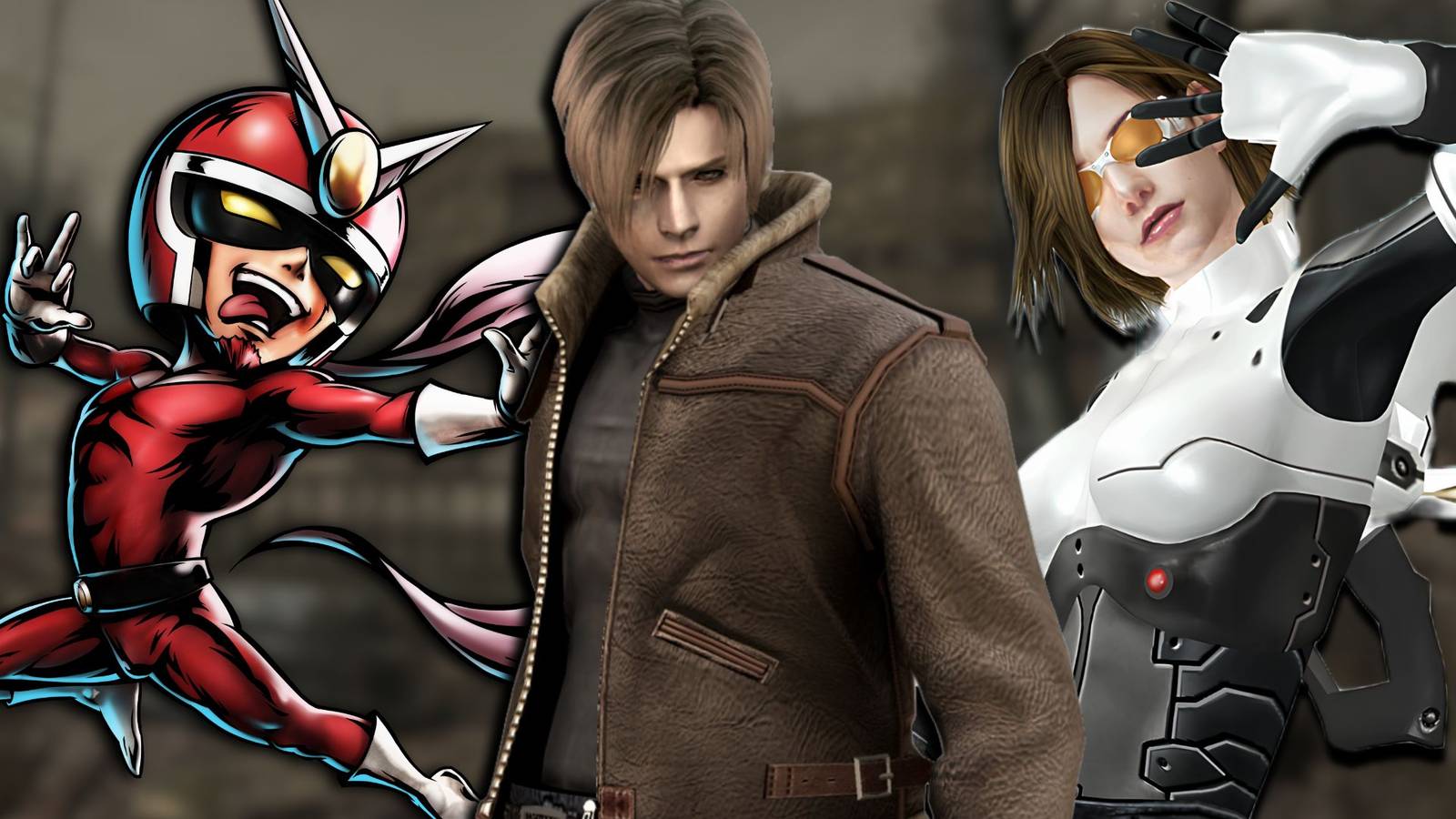
At a surprise press event in Japan in 2002, Capcom announced five titles that would be exclusive to the GameCube. Known collectively as the Capcom Five, the titles consisted of Viewtiful Joe, P.N.03, Dead Phoenix, Killer7, and most shocking of all, Resident Evil 4, which was to be a Nintendo GameCube exclusive. It was a big, bold swing.
Unfortunately, the end result was shockingly lackluster. Each game had its own unique story to tell following its launch, but the concept of the Capcom Five was to increase GameCube hardware sales. It got eyes on Nintendo’s hardware for a moment, but there was little to no movement in regard to consoles actually selling better as a result.
Fate of the Five
Of the five titles, one would be canceled and the rest, except Resident Evil 4, would suffer from remarkably poor sales. It wasn’t just Nintendo that felt the blow from the lackluster performance of the games, as Capcom also felt the heat.
Dead Phoenix would ultimately be canceled, and while Viewtiful Joe and Killer7 would find their own unique cult audiences, P.N.03 was an unmitigated disaster. Directed by Resident Evil creator Shinji Mikami, P.N.03 was one of the worst-selling games of the year and the most critically panned game of the Capcom Five.
Known collectively as the Capcom Five, the titles consisted of Viewtiful Joe, P.N.03, Dead Phoenix, Killer7 and most shocking of all, Resident Evil 4, which was to be a Nintendo GameCube exclusive.
Resident Evil 4 needs no explanation. It was a monumental release for the franchise, and would also lead to the industry’s obsession with third-person over-the-shoulder action games. The survival horror genre was irrevocably changed as a result of Resident Evil 4, and whether that was good or bad depends on your perspective, but there’s no denying just how huge RE4 was.
In totality, the Capcom Five produced a timeless classic and some cult favorites, but is considered one of the biggest failures in the history of video games. Not only did it not complete the goal it set out to accomplish, which was boosting GameCube hardware sales, the games themselves are all fairly forgotten today outside RE4.
The poor end result of the Capcom Five would push Nintendo further into the direction we see them in today. It told them that cutting-edge hardware wasn’t their strong suit, and that while it may mean somewhat muted support from their third-party partners, it created a culture and identity that is very much their own. The Nintendo of today was born from the Capcom Five’s failure to launch.
NEXT
10 Best GameCube Horror Games
Although the GameCube wasn’t a success story overall, these incredible titles are some of the best horror games on the console.
Brand
Nintendo
Original Release Date
November 18, 2001
Original MSRP (USD)
$199, £129, €199
Weight
3 lbs.
